Showing posts sorted by date for query talking points disease. Sort by relevance Show all posts

Sunday, June 30, 2024

The First Biden-Trump Debate: Power, or Nurturance?

Donald Trump
During the first Joe Biden – Donald Trump presidential debate of 2024, Trump said that Biden was weak:
“He opened the borders nobody’s ever seen anything like.”
Later, Trump, who was nearing 78 years of age, volunteered that:
“I think I’m a very good shape. I feel that I’m in as good a shape as I was 25, 30 years ago.”
That is, Trump promised to be strong, while he said Biden was weak.

In contrast, Biden promised to be compassionate and caring:
“I’m going to make sure we have childcare. We’re going to significantly increase the credit people have for childcare. I’m going to make sure we do something about what we’re doing on lead pipes and all the things that are causing health problems for people across the country.”
Joe Biden

As never before, this 2024 debate displayed the two candidates’ moral character. Their words displayed their goals. Political debates are not about facts: political debates are about values. Linguist George Lakoff says that conservatives and liberals prefer distinct kinds of leaders. Conservatives seek what Lakoff calls a “strong father.” Liberals, however, want a “nurturing mother.” The June 27, 2024 debate between Donald Trump and Joe Biden offered voters that exact choice. Trump told more lies than a carnival barker (no offense to barkers!), while Biden tried to show that he cared about Americans. That was the debate’s essence.


Trump, the Strong President?

For example, talking about the border policy, Trump highlighted his strength versus Biden’s weakness:
“And he didn’t need legislation because I didn’t have legislation. I said, close the border. We had the safest border in history. In that final couple of months of my presidency, we had, according to Border Patrol – who is great, and, by the way, who endorsed me for president. But I won’t say that. But they endorsed me for president.

“Brandon, just speak to him.

“But, look, we had the safest border in history. Now we have the worst border in history. There’s never been anything like it. And people are dying all over the place, including the people that are coming up in caravans.” [Italics added]
The name “Brandon” has, for inexplicable reasons, become conservatives’ insulting nickname for Joe Biden. Insult aside, Trump’s historical comment was false. My grandparents simply got off the boat in 1906 and made their case at Ellis Island. Indeed, for most of the 19th Century, the United States had no controls restricting white immigrants, and immigration controls were minimal in the early 20th Century – but facts are never Trump’s selling point. His selling point was strength. Trump sought to contrast his strength versus Biden’s purported weakness.

Nor did Trump offer details. Did he really close the border? I live near the border. I saw nothing of the kind. Is the border wide open today? Again, no. A fact check on NBC News noted that the Trump administration oversaw a massive influx of undocumented immigrants:
“In 2019, the last year before the Covid-19 pandemic brought down border crossings, there were roughly 860,000 illegal border crossings, far more than in any year during the Obama administration.”
Unfortunately, Trump never intended to give facts. Fear erases facts. Trump’s approach was simple and stark: fear (fear of immigrants) – protection (“close the border”) – more fear (“worst border in history”) – well, you get the point. Trump wanted us to think that he was a strong leader who protected the United States from hordes of immigrants. Biden, Trump said, opened the border to immigrant caravans, while Trump will close it again. It made no difference whether the things Trump said were real. He wasn’t talking about reality. He was talking about fear, strength, and protection.


Biden, the Nurturing President?

While Trump promised to protect the United States against fearsome hordes of immigrants, Biden boasted of positive internal improvements. These improvements did not necessarily protect people against external dangers, real or imaginary, but instead sought to improve the nation’s domestic policies. Biden talked about healthcare:
“We made sure that they [minority communities] have health insurance. We have covered with – the ACA has increased. I made sure that they’re $8,000 per person in the family to get written off in health care, but this guy wants to eliminate that. They tried 50 times. He wants to get rid of the ACA again, and they’re going to try again if they win.”
The threat against which Biden warned was not an external invasion, but rather that Trump would roll back healthcare benefits:

So, Biden gave the television audience a choice: elect the nurturing president who protected healthcare access, or the dangerous president who would callously roll healthcare back to the dark ages. Presenting another nurturing benefit, Biden discussed progress in jobs and hiring: 
“We provided thousands of millions of jobs for individuals who were involved in communities, including minority communities.”
Biden took extra credit when he said “we provided,” for the president himself did not provide “thousands of millions of jobs” to anyone. The fairer point would be that job opportunities improved under his leadership. Biden remarked that his policies protected minority communities, who are among the most vulnerable members of our society. I don’t know whether “thousands of millions” was hyperbole, or simply a bizarre math error. (“Thousands of millions” calculates to more people than inhabit the entire surface of the earth, and no American president has ever been that nurturing!)
 

Foreign Policy

The strong father versus nurturing mother metaphors broke out in an interesting way when the two candidates examined foreign policy. Biden emphasized that the United States’ security depends on our foreign alliances, especially from the protection that we receive from the North Atlantic Treaty Organization (NATO). Biden promoted strength through unity: 
“This is a guy who wants to get out of NATO. You’re going to stay in NATO or you’re going to pull out of NATO?

“The idea that we have – our strength lies in our alliances as well. It may be a big ocean, but we’re – (inaudible) able to avoid a war in Europe, a major war in Europe. What happens if, in fact, you have Putin continue to go into NATO? We have an Article Five agreement, attack on one is attack on all. You want to start the nuclear war he keeps talking about, go ahead, let Putin go in and control Ukraine and then move on to Poland and other places. See what happens then.

“He has no idea what the hell he’s talking about.” [italics added]
That is, does United States expect a single strong leader to protect our foreign policy? Or, like Biden, do we see strength in unity?

Trump took a quite different view about the United States’ foreign alliances. He boasted that he asserted strength even over our allies. He explained that he forced NATO members to increase their financial contributions, else he would refuse to support them against Russia:
“But the big thing I changed is they don’t want to pay. And the only reason that he can play games with NATO is because I got them to put up hundreds of billions of dollars. I said – and he’s right about this, I said, no, I’m not going to support NATO if you don’t pay. They asked me that question: Would you guard us against Russia? – at a very secret meeting of the 28 states at that time, nations at that time. And they (sic) said, no, if you don’t pay, I won’t do that. And you know what happened? Billions and billions of dollars came flowing in the next day and the next months.” [italics added]
Trump was laying out an uninformed fantasy (NATO countries do not pay us to protect them) although he did, indeed, get the NATO countries to increase investment in their own defense. Unfortunately, no one in the media or during the debate noted Trump’s inaccuracy. In any case, Trump didn’t care about accuracy. His goal was to show strength. Trump’s message was that he strong-armed our North Atlantic allies. Trump did not tell us that he was an expert: he told us that he was strong. He got things done. He, the strong father, wrestled our allies to the floor. Compared with that strength and power, the fact that Trump knew less about NATO than a well-versed high school student paled into insignificance.


Conclusion

I could go on, and at times the debate got so muddled it was hard to say what positions the two candidates advocated. The key point is that a conservative politician advances by convincing the voters that he or she will be a strong leader who protects them from threats. In contrast, a liberal politician tries to show that he or she will help people reach into their resources and improve their lives. A quick listen to video of the debate confirms the message: Trump was loud and forceful. Biden spoke quietly and often degenerated into details and picky facts of the sort that make voters’ brains glaze over. At times, Biden was so quiet that one could barely hear him. Maybe that carried the nurturing mother metaphor too far: Democrats might want to be nurtured, but they don’t want to be lullabied. 

When pundits complained that Trump lied constantly during the debate, they were right, but they missed the point. Trump’s core supporters don’t want facts. They want a strong leader to protect them. When pundits complained that Biden dwelled too much on data, well, they also missed the point. Social change requires attention to detail: no details, no policy! 

Overall, although this was a terrible debate on both sides, it did offer the American people a choice: pick a strong, forceful leader, or a leader who cares about them and wants to improve their lives. Judging from the polls, public opinion splits about equally between the two candidates, and that split arises precisely from Lakoff’s distinction. The American people might not face the best choice, but they have a clear one. They will not choose according to issues. The choice comes down to values: strength versus compassion.

Earlier Post:

Hillary Clinton and Donald Trump Both Suffered from Talking Points Disease When They Discussed Abortion in their Third 2016 Debate


Earlier post about this debate: 

Biden versus Trump, the June 27, 2024 Presidential Debate, a Study in Character


______________


P.S. The press has made much out of Biden’s ineffectual vocal delivery during this debate. Does that signify cognitive decline? Maybe (his appearance was disturbing), but I don’t necessarily see it. When I read the debate’s transcript, Biden made at least as much sense as Trump – maybe more. That’s not a high standard, but that is the choice the public faces. Biden delivered facts, many of which were true. He stated various specifics and punched out several childish but pointed barbs. I don’t see how a cognitively distressed man could have done that. Although I would still like to know more about Biden’s health, anyone who is concerned about Biden’s thinking ability on June 27 should put aside the video and read the debate transcript.

Preliminary polling suggest that Trump made a far more favorable impression during the debate than did Biden. Still, preliminary polls mean almost nothing (voters are nothing if not fickle), so let us not rush to judgment. 

by William D. Harpine


Copyright ©  2024, William D.  Harpine

Images of Joe Biden and Donald Trump, official White House photos

Thursday, August 24, 2023

Vivek Ramaswamy Suffers from Talking Points Disease--as He Attacks a Program that No Longer Exists

Political newcomer Vivek Ramaswamy became something of the rising star in last night’s (August 23, 2023) Republican primary debate. He suggested that the nation needs civics education, and then quickly showed that he, himself, could use some civics education. Be careful what you ask for! (Clue: speakers need research.)

The culprit? Ramaswamy fell victim to Talking Points Disease. This terrible disease, which is endemic among American politicians, threatens to rot away our national polity. The symptom is that the candidate repeats false, often ridiculous, talking points that appeal to voters’ preconceived ideas. The infection’s cause is not doing research.

Earlier Post: Speakers Need Research, Donald Trump Suggested Injecting Disinfectants to Cure the Coronavirus

Earlier Post: Mike Pence Stepped on the Third Rail in the Republican Primary Debate
 
So, first, expressing his ideas about American education, Ramaswamy suggested that every voter should take a civics test. He wanted to—
“… revive our national identity, where every high school senior should have to pass the same civics test that frankly, every immigrant, including my mother, had to pass in order to become a citizen of this country.”
Although I’m tempted, I cannot agree with Ramaswamy’s proposal. Every school system in the country already requires students to study American history and government, as do most colleges. Students seem to forget the material soon after they pass their tests.

Unfortunately, a few moments after mentioning the civics test, Ramaswamy complained about injustice and social harms supposedly caused by a government program called Aid to Families with Dependent Children (AFDC):
“Part of the problem is we also have a federal government that pays single women more not to have a man in the house than to have a man in the house contributing to an epidemic of fatherlessness.”
This was a standard Republican talking point from the 1960s and 1970s. Little did Ramaswamy know that President Bill Clinton signed a repeal of AFDC in 1997. Republicans, of course, have continued to complain about this program ever since, seemingly unaware that it no longer exists.

Indeed, after hearing Ramaswamy’s comment, Nobel Prize winning economist Paul Krugman commented, tongue in cheek, that “It just occurred to me that a man who believes that the Constitution won the Revolutionary War might well believe that AFDC, eliminated under Bill Clinton, is still supporting the bums on welfare. But yes, let's require that voters pass a civics test.”

Will Ramaswamy’s talking point help him gain voters? I'm sure it will! Are voters who can't name the three branches of the federal government or remember the Bill of Rights going to correct him on the intricacies of long-canceled economic policies?

The cure for Talking Points Disease is to look up your information in credible sources before you open your mouth. Altogether too often, however, politicians simply repeat talking points that their aides have sketched out for them on little note pads. Sadly, in too many cases, the politicians’ aides have no more actual knowledge than the candidates themselves. The voters seem to be fine with that. Certainly, no one in the room challenged Ramaswamy’s audacious factual error. On the contrary, I suspect that many of them wished that they had said it first.

Earlier Post: Hillary Clinton and Donald Trump Both Suffered from Talking Points Disease
 
Can a nation long survive if its leaders are infected by the gangrene of unreality? Talking Points Disease is a serious business.

by William D. Harpine

___________

P.S. Thanks again to the good people at Rev.com, a transcription service, for preparing a debate transcript for the public to read. 
___________

©  2023 William D. Harpine

Mike Pence Stepped on the Third Rail: He Attacked Social Security and Medicare!

Mike Pence
Mike Pence stepped on the third rail: he attacked Social Security and Medicare!

My loyal readers will recall that, at the February 7, 2023 State of the Union Address, President Joe Biden accused a few Republicans of wanting to “sunset” Social Security and Medicare. Republican firebrand Marjorie Tayler Greene shouted, “liar!” Republicans backed down, but not for long!


During last night’s (August 23, 2023) Republican primary debate, former Vice President Mike Pence announced that he, unlike (he claimed) any other Republican, was ready to talk about cutting Social Security and Medicare. Yes, a Republican presidential hopeful stepped on the third rail of American politics and didn’t get electrocuted, at least not yet. The question for today is, how could Pence attack his voting bases’ deepest needs and expect to survive politically?

That’s a hard question, and the answer requires us to look at the smoke and mirrors tricks that unscrupulous politicians use to deceive their supporters. Pence presented his position as mature, sober, and courageous:
“I was the first person in this race to say that we’ve got to deal with the long-term national debt issues. You got people on this stage that won’t even talk about issues like Social Security and Medicare. Vivek, you recently said, ‘A president can’t do everything.’ Well, I got news for you, Vivek. I’ve been in the hallway; I’ve been in the West Wing. A president in the United States has to confront every crisis facing America. I will put our nation back on the path to growth and prosperity and restore fiscal responsibility, just as I did in Congress and as governor.” [italics added] 
For decades, fear-mongering conservative pundits have warned that Social Security and Medicare will go bankrupt at any moment. When I took my new job at the University of Akron in 1982, the dean told me to be grateful for the state retirement system because Social Security would go bankrupt before I retired. Well, I’ve now retired, and I nevertheless receive Social Security and Medicare benefits. So, my dean, like a long line of doomsayers before him, was wrong.

It is no secret that the Republican voting base runs toward the elderly. We all know that elderly Americans depend on Social Security and Medicare. We also know that Republicans will never actually cut Social Security and Medicare; their political movement would drift away like a puff of smoke if they actually tried it. So why do they make these absurd threats?


Let’s speculate:

1. Press reports about the Republican primary debate talked about which candidates seemed strong, their tone of voice, whether they liked Trump, how they raised their hands, and their ages. There was remarkably little reporting about their programs. Knowing this, Pence could advocate ridiculous policies, confident that no one would notice.

2. Although former President Donald Trump has repeatedly promised to protect Social Security and Medicare, cutting those programs has dominated Republican economic ideology for years. Sometimes movement conservatives threaten Social Security and Medicare as a ritualistic obligation.

3. Pence did have a point, of sorts. According to the Department of the Treasury, 21% of federal expenditures go to Social Security and 12% to Medicare. Together, they amount to one-third of federal spending. So, if it is your main economic goal to cut federal spending, Social Security and Medicare need to be on the chopping block.

4. Now, yes, Republican voters do tend to favor cutting government spending. However, I cannot conceive that they would support cutting Social Security, Medicare, or national defense, which doesn’t really leave much else. (Relatively tiny programs like the Department of Education, Amtrak, or foreign aid are little more than rounding errors in the federal budget.)

5. Now, no one thinks that Pence is a plausible candidate for 2024, so he may be preparing for a future run after Trump fever dies. Who knows?


In his State of the Union Address, Biden stated that cutting taxes on rich people does not justify gutting Social Security and Medicare. That, of course, is a value judgment on which people might disagree.

So, like a long line of candidates before him, Pence promised an economic policy that he cannot possibly deliver. Aren’t political spectacles grand?

by William D. Harpine

______________

P.S. Thanks again to the good people at Rev.com, a transcription service, for preparing a debate transcript for the public to read. 
______________

Follow-up post about the debate:


Earlier Post: 


Images: White House photo; Department of the Treasury

© 2023 William D. Harpine


Sunday, August 20, 2023

Matt Gaetz, Sedition, and the Politics of Fear

“Years ago, whenever I entered the USA, I had to sign a declaration that I was not intending to overthrow the American government by force. I never realised that this applied only to foreigners.”

British actor John Cleese tweeted that interesting tidbit about Donald Trump and his recent indictments for trying to overturn the 2020 presidential election. 

Speaking next to Trump at a campaign event on August 12, 2023, Representative Matt Gaetz advocated using force to overthrow the United States government:
“We know that only through force do we make any change in a corrupt town like Washington, DC.”
So, a member of the United States Congress advocated insurrection and disloyalty to the United States Constitution. Trump hesitated but then nodded sagely as Gaetz offered his chilling words. The mainstream press briefly noted Gaetz’ seditious comment and then calmly moved on. How do people betray their country and yet call themselves patriots

All the same, Gaetz offered his justifications. That is, he implied that mysterious powers threatened ordinary Americans, evil powers that can be resisted only by force. This twist led Gaetz to reject legitimate, peaceful political action:
“Mr. President, I cannot stand these people that are destroying our country. They are opening our borders. They are weaponizing our federal law enforcement against patriotic Americans who love this nation as we should.”
Gaetz was channeling common but obviously hyperbolic Republican talking points. Republicans hear diatribes about supposedly open borders and the allegedly unfair treatment of the January 6 Capitol rioters so often that they take them for granted. Indeed, Gaetz polarized the American people. “These people that are destroying our country” contrasted against the “patriotic Americans” who were convicted of rioting in the Capitol building. 

Broadening his conspiracy theory, Gaetz accused unnamed forces of threatening every Republican:
“Know that they are coming for our movement and they are coming for all of us.” [italics added]
The unnamed “they” might be the Deep State, the Illuminati, the FBI, woke people, the New World Order, or, for all I know, any combination of the malevolent forces that populate right-wing conspiracizing. Gaetz’ vagueness—“they”—let the cheering audience fill in the blanks from their own imaginations.

Earlier Post: Hillary Clinton and Donald Trump Both Suffered from Talking Points Disease in 2016

Was Gaetz’ rhetoric particularly unusual? No, it was not. Gaetz talked the way people talk when they commit wrongful deeds. Dr. Albert Bandura’s theory of moral disengagement shows how people justify their unethical behavior by reframing moral issues. From SS soldiers who justified mass murder as “following orders” to more complex reasoning patterns, people find ways to rationalize doing harm. They think of themselves as good people even as they perform horrifying acts. The bizarre talking points that Gaetz parroted gave otherwise patriotic Republicans a shallow (but evidently convincing) way to reframe their destructive intentions.

So, in real life, the violent overthrow of the United States government is, as John Cleese implied, massively unpatriotic. Sadly, too few people seem to care. The Republican Party received Gaetz’ brief speech with rousing cheers and no peep of protest. Lincoln, who fought to save the Union, weeps.

by William D. Harpine

Related Posts: 


© 2023 William D. Harpine

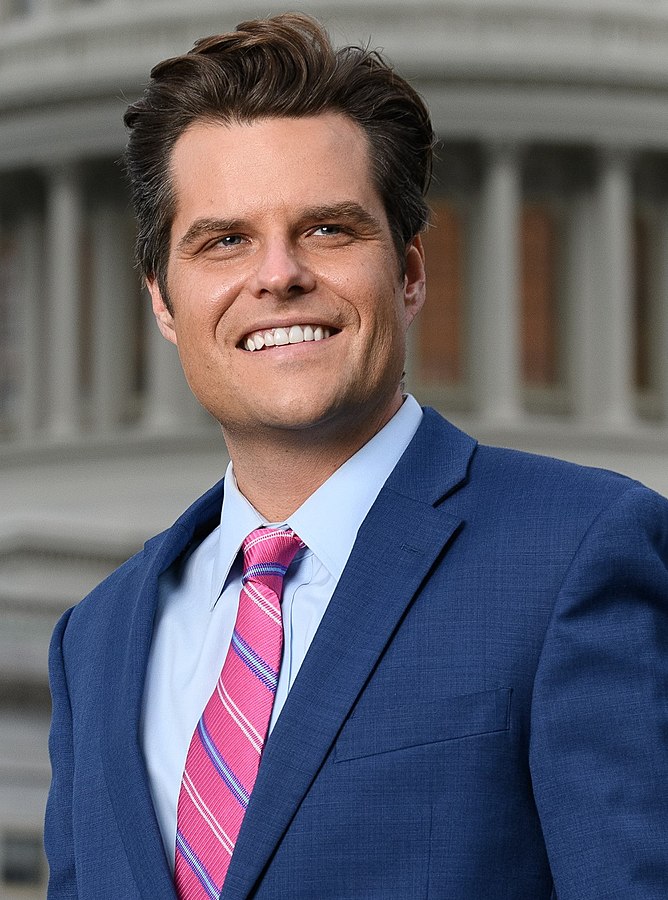
Image: Official photo, US Congress, via Wikimedia

Wednesday, February 8, 2023

Heckling and Anti-Heckling in Joe Biden’s February 7, 2023 State of the Union Address: The Republicans Fooled Only Themselves

Joe Biden at 2023 State of the Union
At last night’s State of the Union Address, delivered to the United States Congress, President Joe Biden proved that bullies never win. The rhetorical issue was heckling. Biden correctly accused some Republicans of seeking to cut Social Security and Medicare benefits. Conservative firebrand Marjorie Taylor Greene heckled, “liar!” Then, in a brilliant rhetorical move, Biden promptly took Social Security and Medicare cuts completely out of the national discourse. Be careful when you heckle . . . for effective heckling requires great skill, while the speaker always gets the last word.

As a matter of public speaking skill, Biden’s exchange worked because he adapted to his audience and responded to the moment. Helpfully, Biden had those obnoxious things—facts—mostly on his side. The Republicans’ heckling failed, not just because they were rude, but also because they were unprepared to discuss policy. By the time he was finished, Biden not only turned the tables on the Republicans' heckling, but, for the moment, the Republican Party’s clumsy attempt to cut Social Security and Medicare.
 

So, here is what Biden said and how the Republicans heckled him

About halfway through the speech, Biden brought up the debt limit crisis, Social Security, and Medicare: 
“Let us commit here tonight that the full faith and credit of the United States of America will never, ever be questioned. Some of my Republican friends want to take the economy hostage — I get it — unless I agree to their economic plans. All of you at home should know what those plans are. Instead of making the wealthy pay their fair share, some Republicans want Medicare and Social Security to sunset. I am not saying that is a majority. Anybody who doubts it, contact my office and I will give you a copy of the proposal.” [italics added] 
A large group of Republicans promptly booed. Greene shouted “liar.”

Biden quickly dropped his hammer:
I am glad you see it. I enjoy conversation. That means if Congress doesn’t keep the programs the way they are, those programs will go away. I don’t think it is a majority of you, I don’t even think it is significant. I am politely not naming them, but it is being proposed by some of you. Folks, the idea is that we are not going to be moved into being threatened to default on the debt if we do not respond.” [italics added]
A bunch of Democrats then cheered.

Seeing no reason to quit while he was winning, Biden then pointed out the (sudden) bipartisan agreement:
“So folks, as we all apparently agree, Social Security and Medicare off the books now, right?” [italics added] 
Bang! Taking advantage of the hecklers, Biden shoved the Republicans’ main talking point right off the table. He then announced that the Republicans had reached a bipartisan, indeed, unanimous agreement:
“All right. We got unanimity. Social Security and Medicare are a lifeline for millions of seniors. Americans have been paying into them with every single paycheck since they started working. So tonight, let’s all agree — and we apparently are — let’s stand up for seniors. Stand up and show them we will not cut Social Security. We will not cut Medicare. Those benefits belong to the American people. They earned them. If anyone tries to cut Social Security — which apparently no one is going to do. If anyone tries to cut Medicare, I will stop them. I will veto it. [italics added]
"I will not let Medicare be taken away, not today, not tomorrow, not ever. But apparently that will not be a problem.”
“But apparently that will not be a problem” sounded suspiciously like gloating. Grasping the moment’s importance, Biden emphasized that both sides had now agreed. The Republicans agreed with Biden by booing and heckling. How remarkable. Note that Biden also summarized why Medicare and Social Security made a big difference for Americans. He reminded Congress that American workers have paid into these programs with “every single paycheck.” He promised that he would stop anyone who tried to cut these programs. Time for a victory lap! The debt limit battle was now over except for some mopping up and handwringing.


What about heckling?

Now, witty, clever, and to-the-point heckling is a time-honored rhetorical tradition. Nevertheless, my graduate school mentor Kurt Ritter insisted that boorish heckling should never be tolerated. Biden brilliantly not only shut the boorish hecklers down, but he actually used their heckling against them to nail down his policy proposals.

"OK, Boomer:" Chlöe Swarbrick Teaches Us How to Put a Heckler Down Flat


Did Republicans really want to cut Medicare and Social Security?

The fallback position when Greene shouted “liar!” was for Republicans to pretend that they had never wanted to cut Social Security and Medicare. That, on the one hand, is good for policy. Medicare and Social Security cuts have now been swept off the bargaining table. But had they threatened to cut Social Security and Medicare? Of course they had. And when Republicans denied that they wanted to cut Social Security and Medicare, well, they themselves were the liars. Let’s look at that.


Let’s start with basic math.


Math shows that the massive cuts that Republicans seek can only be obtained by cutting “entitlement” programs like Social Security, Medicare, and Medicaid. (See the Treasury Department chart.) We know perfectly well that Republicans will never vote to cut National Defense. Discretionary spending (national parks, border enforcement, the FBI, and so forth) represents only a small part of federal expenditures. That leaves entitlement cuts. Policy-wise, Republicans have painted themselves into a corner: their elderly voting base depends on Social Security and Medicare, not to mention Medicaid (which didn’t come up yesterday). Tax cuts for the rich have been a hallmark of Republican policy for more than 40 years. Fiscal responsibility, by which they mean balancing the budget like a family checkbook, has been a hallmark of Republican rhetoric since forever. Alas, those goals don’t add up, setting the stage for Biden’s anti-heckling.


Do Republicans seek Social Security and Medicare cuts?

Oh, yes, despite Greene’s heckle, a powerful Republican core has long sought to rip up Social Security and Medicare. In 2010, for example, conservative Senator Mike Lee said this on video:
“I’m here right now to tell you one thing you probably have never heard from a politician: it will be my objective to phase out Social Security, to pull it up from the roots and get rid of it.”
Liars, be warned: in the 21st Century, there’s always a video!


Lee is not alone. Last summer, Republican Senator Lindsey Graham warned that the United States needs to make cuts (“reforms”) in “Medicare and Social Security and other entitlement programs.” He absurdly said that “entitlement reform is a must for us not to become Greece.” Graham correctly noted that discretionary funding can’t be cut enough to balance the budget.


Indeed, just last week, former Vice President Mike Pence brought up a DOA proposal to replace Social Security with private investments for future retirees. Ludicrously, Pence called this a “modest reform.”


Why did the Republicans collapse?

So, yes, many Republicans want to chop up Social Security and Medicare. One presumes that this is because their anti-government doctrine requires them to oppose entitlements. All the same, their voting  base is elderly, stuffing the Republicans into a self-created quandary. Reacting, they neither took a coherent position nor did they defend their ideas. Instead, they heckled. Now, effective heckling needs to be witty and intelligent. The Republican’s heckling was neither. I very much fear that the Republican Party has become so enamored of its own dogmatic talking points that they are no longer either willing or able to conduct even the simplest policy analysis. Lindsey Graham’s careless interview expressed a tiny bit of truth. If, indeed, the United States wants to balance the federal budget entirely by making cuts, Medicare and Social Security need to be on the table.

That begs two important questions. First, is balancing the federal budget an important policy goal? Although politicians act as if it is, knowledgeable economists, liberal and conservative alike, do not see this as a simple issue. Second, why is taxing billionaires such a terrible idea? There are no easy answers in economics. We fall into the abyss if we pretend otherwise.


Do Republicans still want to cut Social Security and Medicare?

What a silly question. Will they give up just because Biden bludgeoned them at the State of the Union? Of course they aren’t giving up. Biden humiliated them and temporarily shut them down and will now win the debt limit fight, but that doesn’t mean that Republicans have finished.

Remarkably, even after the Republican debacle at the State of the Union speech, Jim Geraghty, writing for the National Review Online, which is the closest that we have to a responsible conservative publication, responded that Democrats and Republicans alike were in “collective denial” about the need to cut Social Security and Medicare benefits. Geraghty cited official figures that Medicare and Social Security would eventually be unable to pay full benefits.

Just as promptly, in the same publication, Philip Klein explained that what he called fiscal responsibility required cutting Social Security and Medicare. Klein complained about the “grotesque bipartisan moment.” Horrified, not by the boorish heckling, but by the way Republicans caved, Klein said: 
“There were plenty of things to dislike in President Biden’s State of the Union speech, but the most grotesque moment actually was one of the most bipartisan: when both Republicans and Democrats stood with Biden to applaud the idea of not touching Social Security and Medicare, which both desperately need to be pared if there is any hope of the United States escaping a fiscal crisis.” [italics added] 
Before I get back to public speaking issues, let’s remember two obvious math points:

First, one way to make sure that Social Security and Medicare will be funded in the future is to cut benefits. That obviously continues to be the conservative agenda.

Second, increased revenue accomplishes the same goal. Could we tax the billionaires, for example, as Biden advocated in his speech?


Conclusion

So, the Republicans’ heckling failed, not only because they were rude, not just because they were not witty, but also because they failed to inform themselves. Not only were they uninformed about basic economics, but, worse, they also did not even know their own public policy positions.

In contrast, Biden’s anti-heckling offered basic facts. He cited the Republicans’ own bargaining position. Once the Republicans heckled themselves into a corner, Biden tightened the issue down with force. He said, not once, not twice, but over and over, that he was glad the two sides had reached unanimity. He literally tricked the Republicans into bipartisanship! In the face of the Republicans' heckling, Biden remained upbeat, positive, and complimentary of his opponents. 

The United States still faces a debt limit squabble, but the Republicans’ negotiators now face a big problem, a deep, self-inflicted wound that incapacitates their position. They hurt themselves because they did not know how to heckle (or, in this case, when not to heckle). If they had just zipped up their mouths, they could have continued with their policy goals. Biden in contrast, demonstrated extraordinary anti-heckling technique.

“I enjoy conversation,” Biden said. All communication entails interaction. Politicians forget this basic rule at their peril. 

________________

P.S.: Speaker of the House Kevin McCarthy had warned his caucus to behave themselves during Biden's speech. It didn’t help.


Images: White House webpage, US Department of the Treasury 

Wednesday, September 30, 2020

The First Trump-Biden Debate: Interruptions for a (Non) Cause

Last night, Donald Trump and Joe Biden participated in the most bizarre excuse for a debate in American political history.

The polling website FiveThirtyEight's headline about the debate said, “Trump Interrupts to Point of Chaos in First Debate.” No kidding. Let's be clear: a debate is an organized exchange of ideas following rules. Trump ignored the rules, interrupting Biden while dodging obvious questions for which he should have been prepared. Biden broke the rules a few times himself, mostly when he tried to get in a word edgewise. 


Earlier Post: You Need a Good Debate Format

I was on my high school and college debate teams for six years, and was a debate coach at four universities. Three points about last night’s debate: 

(1) Trump interrupted Biden to prevent Biden from making his points.

(2) Trump interrupted Biden to show that he is forceful.

(3) Trump was appealing to voters who do not care about policy.


In this post, I'll talk about (1), and plan to write about the other two points in days to come.


Why Did Trump Interrupt so Often?
 

Here’s a hypothesis: Trump’s policies are basically failures: he has never presented the comprehensive health care overhaul he promised, even though the nation is overrun by a pandemic, while unemployment is sky-high and the economy is collapsing. He hasn't built the wall, and Mexico hasn't paid for it. Let us further suppose that Trump was unprepared, failed to do his homework, and lacked awareness of even the most basic policy issues. Further, Biden was prepared and does understand basic policy issues. 

Now, if Biden got a chance to speak at length, for the full time that the debate rules allowed, without interruptions or distraction, he would have conclusively demonstrated that his policies were superior. Trump would be unable to respond in kind since he has no policy expertise or successes to offer. 

So, during the debate, Trump interrupted, quickly and loudly, to make bizarre, off-the-point comments to draw Biden away from substantive issue discussions. 

Trump's Healthcare Interruptions

Here’s a gloriously awful example from early in the debate. Moderator Chris Wallace of Fox News, who was far more effective four years ago when he moderated one of the Trump-Clinton debates, asked Biden to talk about a public option under the Affordable Care Act. The public option is, of course, a conservative bugbear that leads to constant ranting on Fox News and talk radio. Wallace asked: 

“I am asking the question. That it will, it will end private insurance and create a government takeover of health care.” 

Trying to correct this common misunderstanding, Biden said: 

“It does not. It's only for those people who are so poor they qualify for Medicaid, they can get that free. In most states, except governors who want to deny people are poor, Medicaid. Anyone who qualifies for Medicare -- excuse me, Medicaid -- would automatically be enrolled in the public option. The vast majority of the American people would still not be in that option. Number one – 

So far, that sounded like a precise, well-rehearsed answer in the making. Of course, Trump couldn’t allow that. Biden would make him look like a fool. So, he interrupted: 

“So you agree with Bernie Sanders, who’s left on the manifesto we call it, that gives you socialized medicine.” 

Now, first, it was not Trump’s turn to speak. Second, Bernie Sanders isn’t running for president. Third, Trump’s interruption stopped Biden before he could explain why his policy was not socialized medicine. Trump’s diversion worked just fine, for the next thing Biden said was: 

“Look. The fact of the matter is, I beat Bernie Sanders--”

Maybe Biden was trying to explain that his policy and Sanders policy differed. He never got the chance, for Trump broke in again: 

“You got very lucky.” 

That, of course, had nothing to do with healthcare. Unfortunately, Biden took the bait: 

“I got very lucky, I’m going to get very lucky tonight as well. And tonight I'm going to -- here's the deal, here’s the deal. The fact is that everything he’s saying so far it's simply a lie. I'm not here to call out his lies; everybody knows he’s a liar. I want to make sure --  I want to make the President--” 

That wasn’t a bad answer. Biden expressed confidence and criticized Trump for speaking falsely. But did you notice what he didn’t talk about? He didn’t talk any more about healthcare or the public option. I’ve written before the Trump is a master of misdirection, just like a stage magician. Yes, Trump was rude, and irrational, and incoherent. But he put a dead stop to Biden’s answer, tricking him into wasting his time. 

Earlier Post: Trump, the "China Virus," and the Art of Misdirection


It got worse. Trump next said:
 

“You just lost the left. You just lost the left. You agreed with Bernie Sanders on a plan.” 
That didn’t make much sense, but Trump got Biden to stop talking about healthcare and diverted him to talking about political strategy. Biden then scored the zinger of the night: 

“Folks, do we have any idea what this clown is doing?” 

Okay, sure, fight fire with fire. Trump had it coming. But, going back to Wallace’s question, this was Biden’s chance to talk about healthcare policy. Instead, he let Trump continue to bait him. Yes, Biden got the better of the exchange. No question about it. All the same, his well-rehearsed discussion of the healthcare public option had screeched to a smoking halt. 

Realizing that he’d been diverted, Biden turned back to the topic: 

“Let me tell you what. He is not for any help for people needing health care because he in fact already cost 10 million people their health care that they had from their employers, because of his recession, number one. Number two, there are 20 million people getting health care through Obamacare now he wants to take it away. He won't ever look in your eye and say that's what he wants to do. Take it away.” 

Okay, that was back on track. Good. Biden stated some numbers and contrasted his policy with Trump’s. Not for long, however. Trump interrupted again, blurting out this incoherent nonsense: 

“No, I want to give them better health care at a much, much lower price because he has no, he doesn't know how to read fixed he has never already played it to an extent he has now.”

I’m not sure that’s even English. Of course, we all know that neither Trump nor any of the other Republicans have ever actually proposed an Obamacare alternative. Get better healthcare at a much lower price? Trump has been promising that for years, without ever giving the actual plan to make it happen. That’s not the point. The point is that, once again, Trump stopped Biden from giving his policy. By this point, moderator Chris Wallace, who was just as bamboozled as Biden, actually turned the discussion over to Trump. With that ill-considered transition, Wallace bypassed what was supposed to be Biden’s opportunity to speak: 

“I know you’ll realize you’re both speaking at the same time. Let the President’ s -- go ahead sir.” 

A moment later, Wallace did try to give the exasperated Biden a chance to explain his policy, but by that point he had lost his train of thought – as any other debater would have by this point. No, Trump never gave a healthcare policy. No, he never said anything remotely coherent or intelligent about Biden’s policy. 

By interrupting, bullying, and ranting, Trump prevented Biden from giving the two-minute explanation of his healthcare plan that the rules entitled him to present. 

Anyway, that’s just one example. This kind of thing went on throughout the debate. 

So, back to my hypothesis. Biden was well-prepared with policy proposals. He had done his homework. Trump, in contrast, had no idea what he was talking about. Instead of talking about policy, which was beyond his ability, Trump spewed out conspiracy theories and nonsense that he must have picked up from conservative cable news and talk radio shows. What Trump did, with supreme success, was to short-circuit the debate to stop Biden from making himself look good. Deep inside, I think that Trump knew that Biden was better prepared and felt that his only chance was to direct attention away from Biden’s policy. The interruptions and crosstalk served that purpose brilliantly. 

So, yes, Trump looked and sounded very bad during this debate. No, he did not act like a grown-up. Yes, he was incoherent. No, he didn’t say a single thing about how he would make healthcare better. 

What he accomplished was to stop Biden from explaining how he would make healthcare better. So, the debate was a disaster for Trump, but it was, to some extent, also a disaster for Biden. Trump was not trying to win the debate. He was trying to make Biden lose. 

Earlier Post: Hillary Clinton and Donald Trump Suffered from Talking Points Disease in the Third 2016 Presidential Debate


Suggestions from a Former Debate Coach

How to prevent this? Every high school and college debate coach has judged dozens if not hundreds of academic debates with unruly debaters. Any experienced debate coach could have handled this better than Wallace. Here are some suggestions: 

(1) When a speaker’s time is up, the moderator should stand up, and, if necessary, walk up to the podium and stand directly in front of the speaker until the ranting stops. Obnoxious, but effective. The moderator is not trying to win a popularity contest.

(2) Any time a speaker interrupts, even just one word, the opponent should get an extra minute added to the speaking time. This should be done electronically, preferably with a flashing interruption light.

(3) The speaking time should be put in a huge, bright display directly behind the speakers so the television audience can see whose turn it is and how much time is left.

(4) If all else fails, mute the microphone - right away. 

Conclusion

Yes, unscrupulous people will break the rules. We need rules because people do not always behave themselves. And, although Biden could have confronted Trump more effectively, it’s not his job. It’s the moderator’s obligation to control the debate. What a shame that Wallace, with all his experience, didn't know how to do that. 

Friday, July 17, 2020

Trump, Biden, and Defunding the Police: Once Again, Trump Suffers from Talking Points Disease

Donald Trump, White House photo
Alas, like many politicians before him, President Donald Trump has fallen ill from the Talking Points Disease. He repeated a common but false talking point because he had not taken time to inform himself. Relying on ridiculous conservative talking points instead of research, Trump falsely accused likely Democratic presidential nominee Joe Biden of seeking to defund the police. Fox News correspondent Chris Wallace made him look silly. The cure is for speakers to inform themselves before they speak.

What Is Talking Points Disease?

The Talking Points Disease occurs when a someone repeats prepared political talking points but has no idea what they mean, much less whether they are true. Talking points are not ideas; they’re just empty words. Political parties often prepare talking points for their politicians, not to mention their media friends. They print these up and hand them out to supporters. Often they try to keep them secret, but sometimes they post their talking points on the Internet. Rarely are these talking points accurate.

Earlier: Donald Trump and Hillary Clinton Suffered from Talking Points Disease in their 2016 Debates

For example, political operative Frank Luntz's famous memo about Republican 9/11 talking points advised Republicans to say things like, "Communicate that you are leading the fight for the principles of freedom and security." Lutz offered sample passages entitled "Words that Work." Politicians didn't need to understand any of this; they just needed to say the words. Republicans who used Luntz' talking points and "words that work" won several elections.

What Was Trump's Biden / “Abolish the Police” Talking Point?

In this case, Trump repeated a conservative talking point, that Biden wants to defund and abolish the police. Of course, “Defund the Police” is a left-wing talking point that the more extreme politicians mindlessly spread. Usually, what they really mean is that they want to reallocate some police funding toward social spending and social work.

Earlier: Mike Lee Suffered from Talking Points Disease in His Ridiculous Seahorse Speech 

Conservatives lay out talking points in media outlets that liberals don’t even notice. That works out well for them; they don’t need to keep their tactics secret if oblivious liberals don’t bother to look. For example, writing in the conservative The Federalist a few weeks ago, David Marcus wrote that Biden would simply give in to defunding the police. 

Marcus’ accusation (like many others) lays out standard conservative talking points. Nevertheless, Marcus hedged his statement and never quite said outright that Biden sought to abolish the police. Instead, “Defund the Police” gave him a theme that helped him spin out a conspiracy theory. No doubt he hoped to hoodwink conservative voters. Instead, he, or someone like him, or maybe somebody on Twitter who said the same thing, hoodwinked President Trump. The problem comes when people, like President Trump, begin to believe their own propaganda.

So, using talking points that he did not understand, Trump had an interesting exchange during a Rose Garden interview with Fox News correspondent Chris Wallace. Wallace asked why the shootings and violence in cities seem to have become so much worse. Trump responded that the Democrats run cities poorly and added:

“It’s really because they want to defund the police. And Biden wants to defund the police.

Wallace interrupted Trump and said,
“Sir, he does not.”

Trump interrupted Wallace and said,
“Look, he signed a charter with Bernie Sanders…”

Wallace interrupted in turn:
“And he said nothing about defunding the police.”

Irritated, Trump sneered and said,
“Oh really, it says abolish, it says defund . . .” He then snapped, “Let’s go get me the charter, please.”

Trump’s staff obtained the charter summary. Trump looked through it, as Wallace explained later, “But he couldn’t find any indication, because there isn’t any, that Joe Biden has sought to defund and abolish the police.” Wallace chuckled.

So, Trump repeated a talking point, but Wallace, who was better-prepared, caught him red-handed. This time around, Trump generated plenty of self-induced bad publicity. PolitiFact gave Trump's claim a Pants on Fire rating. National newspaper USA Today promptly described the embarrassing exchange. Forbes entitled their story "Trump Wrongly Suggests Biden Supports Defunding the Police in Fox News Interview."

Oh, the Talking Points Disease!

Trump's Rose Garden debacle teaches us several lessons about the Talking Points Disease.

First, speakers need research. There is no substitute, and I mean none, for being a well-informed speaker. “Defund the Police” is a slogan, not information. Trump needed to inform himself about Biden’s policy positions. He obviously did not.

Earlier: Speakers Need Research: Trump and Bleach Injections


Second, talking points are, by their nature, shallow, phony, and meaningless. “Defund the Police” is a superficial slogan to begin with. Apparently, it never occurred to Trump that Biden would have laid out a more nuanced position.

Most people would like to think that our leaders know more about what’s going on than the rest of us. But politicians who suffer from Talking Points Disease know less than the rest of us, not more. In this case, kudos to Chris Wallace for correcting Trump so quickly and efficiently.

The worst part is that Trump believed his own talking points. He was so convinced that he barked at his staff to get him the document. The document did not support him. Oops! Unlike Trump, Wallace had done his homework. He had read the Biden-Sanders document and knew what it said.

When I was on my college debate team many years ago, the best debaters I encountered on the circuit were not the glib fast talkers. No, indeed, the best debaters showed up for the contest with the best research. They knew the debate topic from front to back. They carried files of facts, quotations, and statistics ready for whatever happened during the debate. Yet, we live in an era when facts are disparaged and conspiracy theorists seem to rule the nation. Beware of Talking Points Disease! Talking points sometimes win elections, but Talking Points Disease can put a constitutional republic into the ICU.

P.S. "Defund the Police" is a ridiculous slogan. "Reform the Police" conveys what most liberals really want, and "Defund" just gives ammunition for, well, conservative talking points.