Showing posts with label right-wing rhetoric. Show all posts

Sunday, August 9, 2020

Should Schools Reopen to Save the Economy? Conservative Pundits Quote Chuck Schumer Out of Context. Typical.

Sen. Chuck Schumer, Senate Portrait
Democratic Senator Chuck Schumer recently said during a press briefing that the United States economy will suffer unless we reopen schools. Conservative media, deceptive as usual, jumped all over this, charging Schumer with hypocrisy for challenging President Trump’s demands to reopen schools, while ignoring what he had said not one second earlier.

Sigh. We must once again talk about context.

Background first. Coronavirus rages across the country. Schools that reopen without meeting safety guidelines have quickly encountered widespread infections.

Arguing that schools are essential to the economy, Trump announced, wrongly, that children are “virtually immune” to the novel coronavirus and said that schools need to reopen to boost the economy. He said nothing about the safety of teachers and other staff members, not to mention families who might be infected. Trump complained that Democrats want to keep schools closed for “political purposes,” presumably to make him look bad.

What did Schumer say?

At an August 7 “media availability," Schumer said that schools needed to reopen if it could be done safely:
"What is one of the biggest problems facing us in the next month as the Speaker mentioned? Schools, opening up schools safely. If you don't open up the schools, you’re going to hurt the economy significantly because lots of people can't go to work. Executive Orders leave out schools altogether."

Note the nuance: "Schools, opening up safely."  


How did conservatives respond?

Always on the alert for liberal hypocrisy, whether real or imagined, conservative media jumped all over Schumer for, they implied, supporting Trump’s position. For example, RT News, a Russian-government-funded news outlet that consistently favors Trump’s policies, said this:

“One comment from Schumer went viral as it didn’t seem to match the outrage shown to President Donald Trump when he mentioned the same thing.

"'If you don’t open up the schools, you’re going to hurt the economy significantly,' Schumer said, 'because lots of people can’t go to work.'

"The president has floated the idea of fully reopening most schools in the fall despite the coronavirus pandemic, but he has found pushback with liberal critics each and every time.

"Schumer’s admission that not reopening schools will hurt the economy, which the president has argued, was seen as a surprising 'moment of clarity' by critics on social media who latched onto the comment."

RT didn't see Schumer's comment as nuanced. They called it an "admission," as if Schumer accidentally blurted out that he agrees with Trump. They called it a "moment of clarity" in which Schumer's words accidentally unveiled his secret opinion. Similarly, the Twitter account @ForAmerica commented this:

"So... it's okay when it comes out of Chuck Schumer's mouth?"

But that takes Schumer's comment out of context. 

Earlier Post: Context, Proof-Texting, and the Magic Power of Words

The problem is, conservatives like to imply that Democrats want to shut the schools down for political reasons. It never occurs to them that everyone wants schools to be open; it’s just that we need basic public health measures to reopen them safely. Schumer said – quite clearly – that keeping schools closed hurts the economy, which I think everyone agrees with, but insisted that schools need to reopen safely. The Democrats’ position on this issue, with which I completely agree, is that the coronavirus is raging out of control and schools can’t yet reopen safely. Control the virus first, then reopen schools. 

The rhetorical problem arises because the two sides framed the issue differently. If you believe, as most Republicans apparently do, that the virus is either a hoax or under control, there is no reason to keep schools closed. If you believe, as Schumer apparently does, that the virus should be controlled by public health measures like testing, contact tracing, and mask-wearing, then you implement those measures before you send children, teachers, and school staff into danger.

But I suspect, quite frankly, that the conservative pundits know this deep inside. That’s why they strategically omitted Schumer’s preparatory phrase: “Schools, opening up schools safely.” The key word is safely. The pundits omitted the word safely so they could pursue their own agenda, thus easily fooling anyone who didn’t bother to check the original source. That omission could be no accident. 


So, what are the two frames?

Liberals, like me, frame the controversy as a battle between ignorance and expertise. Scientists tell us how the coronavirus spreads, offering well-known public health measures to help control it. Trump is wrong because he ignores the experts. Of course that is how I think. I spent years earning my PhD, and I would like to think that people who have studied a subject know more about that subject than people who have not. What else would you expect me to believe?

Conservatives, however, often frame the conflict as a fight between light and darkness. The forces of good, they say, support Trump. Liberals, they say, want to close schools because liberals are malicious and closing schools will crush the economy and make Trump look bad. The idea that experts actually know something means nothing to them. For many Trump supporters, Trump's supposed goodness is their primary framework.

Nevertheless, I started this blog post by talking about context. What many people don’t understand – and I’ve never been able to get my fellow rhetorical scholars to understand this point – is that context doesn’t mean much to conservatives. That's not how most conservatives think. Conservatives believe in words, as if words have magical powers. They can snap Schumer’s comments out of context, and his words, out of context, now support the conservative perspective. If the words are right, context means little to Schumer's critics. 

So, conservatives heard Schumer say: “If you don't open up the schools, you’re going to hurt the economy significantly because lots of people can't go to work.” They felt no need to include his comment about opening the school safely. They think that’s entirely fair, because, when you think like a conservative, it is the power of the words themselves that reveal what Schumer believes deep inside. They could then conclude that Schumer was merely hypocritically opposing Trump for crass political reasons. They don’t care about the verbal context. They don't care that he said to open schools safely.  Goodness, not factual accuracy, is primary, and the ultimate measure of goodness is Trump himself.

Of course, if you think the virus is a hoax, the question of whether that you can open the schools safely loses all meaning. 


Lessons:

First, context matters. Leaving out even one or two critical words can completely change a sentence’s meaning. Honest people, which obviously does not include the conservative pundits who I quoted above, always check context. 

Earlier Post: The Nunes Memo, Why Does Context Matter?

Second, responsible citizens will check the original source before they believe accusations. You cannot trust the conservative media to tell us anything accurate about what Democrats believe. You need to check the original source. (And, yes, I look at the original source before I believe what liberals say about conservatives.)

Third, framing theory says that people view frames as primary. Liberals framed the dispute in a slogan: “listen to the experts.” Conservatives framed the dispute in their own slogan: “make America great again.” The conservative slogan implies that America was once great and fell apart when Democrats ran the country. That is why they become suspicious when they hear “listen to the experts.". As fate has it, however, people are unlikely to change their frames. People understand truth and goodness from within the context of their own frames, and often find the other sides' frames incomprehensible

And, of course, let's remember that the novel coronavirus infects people with no regard to their frames, assumptions, or contexts. Oops. 


PS: for more information about framing theory, here’s a good link. 


Image: US Senate photo

Sunday, July 5, 2020

Did Donald Trump Turn Dr. Martin Luther King, Jr. into a Conformist Right-Wing Fanatic? I Don’t Think So, but He Tried. Let’s Look at the Mount Rushmore Speech

Mount Rushmore
In his July 3, 2020 Mount Rushmore speech, President Donald Trump complained about mob rule and the destruction of history: “Our nation is witnessing a merciless campaign to wipe out our history, defame our heroes, erase our values, and indoctrinate our children.” To support his frightening warning, Trump cited – drumroll! – nonviolent protestor Dr. Martin Luther King, Jr. Co-opting King’s message to mean the exact opposite of what King said, Trump turned a vision of unity and justice into division, driven by the hidebound refusal to change.

We learn history by studying the past. Trump, however, reversed the past while pretending to revere our heritage

Trump’s speech brought demonstrations by Lakota complaining that the government had stolen Mount Rushmore from them. The event featured strict anti-social distancing policies during the coronavirus pandemic (the chairs were zip-tied together). Trump's rambling speech threw out right-wing tropes faster than a jai alai player flings balls.


Trump Cited Martin Luther King, Jr.

But the press overlooked that Trump, who recently tweeted a video of a man shouting “White Power,” called on the spirit of Dr. Martin Luther King, Jr. to endorse his ideas. He did so by referring to King's famous "I Have a Dream." Trump's brazen rhetorical move highlighted his goal to block social change at all costs.

Trump said:

“They would tear down the principles that propelled the abolition of slavery in America and, ultimately, around the world, ending an evil institution that had plagued humanity for thousands and thousands of years. Our opponents would tear apart the very documents that Martin Luther King used to express his dream, and the ideas that were the foundation of the righteous movement for Civil Rights. They would tear down the beliefs, culture, and identity that have made America the most vibrant and tolerant society in the history of the Earth.”
Shortly after, Trump misleadingly pretended that King endorsed America's foundational values:

“We must demand that our children are taught once again to see America as did Reverend Martin Luther King, when he said that the Founders had signed “a promissory note” to every future generation. Dr. King saw that the mission of justice required us to fully embrace our founding ideals. Those ideals are so important to us — the founding ideals. He called on his fellow citizens not to rip down their heritage, but to live up to their heritage. (Applause.)”

That is, of course, nothing like what King said. Trump is incorrect. So, let's now look at King's own words. 


But Trump Missed King’s Point

 King did not endorse America’s social order; instead, he called on the nation to change and live up to its founding ideals. This is what he said in the “I Have a Dream” speech passage to which Trump referred:

“When the architects of our republic wrote the magnificent words of the Constitution and the Declaration of Independence, they were signing a promissory note to which every American was to fall heir. This note was a promise that all men, yes, black men as well as white men, would be guaranteed the ‘unalienable Rights’ of ‘Life, Liberty and the pursuit of Happiness.’ It is obvious today that America has defaulted on this promissory note, insofar as her citizens of color are concerned. Instead of honoring this sacred obligation, America has given the Negro people a bad check, a check which has come back marked ‘insufficient funds.”

So, King did not say to lay down and accept how things were; he called on the nation to offer the human rights that the Declaration of Independence promised. Instead, King wanted us to ask, how could we have social order if we lacked justice? Indeed, King’s famous speech discussed issues that could have been torn from 2020’s headlines:

“We can never be satisfied as long as the Negro is the victim of the unspeakable horrors of police brutality.”

Quoting the prophet Isaiah, King said:

“We cannot be satisfied as long as a Negro in Mississippi cannot vote and a Negro in New York believes he has nothing for which to vote. No, no, we are not satisfied, and we will not be satisfied until ‘justice rolls down like waters, and righteousness like a mighty stream.’”

Despite King's hope, stories of police brutality still fill the news in 2020 and send protesters into the streets. Trump recently tweeted that a Black Lives Matter leader favored "Treason, Sedition, Insurrection." And we still find conservative politicians, including in my home state of Texas, working with all their might to make it hard for minorities to cast their ballots. Former Department of Justice voting rights prosecutor Justin Levitt recently said that, “The reversals in Texas voter ID and redistricting should be scandalous.” I testify from my own experience that obtaining a Texas ID is a nightmarish experience. Trump was not trying to fulfill King's vision; on the contrary, Trump wanted to overturn it. Yet, Trump twisted King's words to support his own views.


No, King did not tell people to accept the status quo. On the contrary, in his “Letter from a Birmingham City Jail,” he asked, what were White churchgoers thinking when the “bruised and weary Negro men and women decided to rise from the dark dungeons of complacency to the bright hills of creative protest?" He said “creative protest.” Not submission.


A Clash of Values

Yet, in his Mount Rushmore speech, Trump said not one word about voting rights or police brutality, instead complaining about “angry mobs” who protested racism. Instead of speaking for justice, Trump complained about a “left-wing cultural revolution” that “is designed to overthrow the American Revolution.” Unlike King, Trump made social stability, not justice, his prime value. According To Trump's speech,

“The radical ideology attacking our country advances under the banner of social justice. But in truth, it would demolish both justice and society.”

Which shall be the United States of America’s central value? Justice, or social order? A true conservative, Trump asserted that we can have no justice without social order. But King denied that we could enjoy social order if we lacked justice. While praising history in his Mount Rushmore speech, Trump made a bold excursion into historical unreality. He reversed King's values along the way. 


Technical note: Prosopopoeia is a classic rhetorical trope in which a speaker pretends to be speaking for someone else. This works best when the speaker pretends to be speaking for someone who is dead, like Martin Luther King, Jr., who cannot complain about being misquoted. Other examples might be, “your grandfather would turn over in his grave,” or “our Founding Fathers would never want to tear down a statue.” We often call upon revered figures to support our own ludicrous ideas. It always sounds traditional. This is what Trump did when he cited, twisted, and misquoted Martin Luther King, Jr.

Prosopopoeia” is a Greek word that means “personality.”

Thanks to my graduate school classmate Martin Medhurst and his intrepid team at AmericanRhetoric.com for publishing a definitive text of King's speech.

Saturday, May 30, 2020

Is Ideology Truth’s Enemy? William Barr, Tim Walz, and the Antifa Conundrum

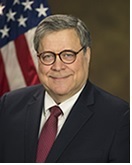
William Barr
This weekend, we have seen violent outbursts in several of America’s cities, protesting recent police killings. Different Americans are, however, reacting in different ways. Who do they think is responsible?
 

Attorney General of the United States William Barr gave prepared remarks at a press conference today. He attributed the violence to extreme left-wing agitators:

“Unfortunately, w/ the rioting that is occurring in many of our cities around the country, the voices of peace protest are being hijacked by violent radical elements.”

He continued that:

“Groups of outside radicala and agitators are exploiting the situation to pursue their own separate and violent agenda.”

And here came his main point:

“In many places, it appears the violence is planned, organized, and driven by anarchic, far left extremist groups using Antifa-like tactics.”

Of course, "appears" is a great weasel word. Barr said “ant-EE-fuh.” “Antifa” stands for anti-fascist, and going against fascism seems patriotic.  Fascists have had a bad reputation ever since World War II.  But “ant-EE-fuh?” By pronouncing it that way, instead of “anti-faa,” which is more etymological, Barr blurred the group’s anti-fascist message, making Antifa sound foreign and disloyal. Does that reflect his ideology? Did he mispronounce the word to downplay the anti-fascist symbolism?

More important, he asserted, with the authority of the Department of Justice, that left-wingers are driving the protest against police violence. Does he have evidence for that? Or is it just an assumption? I worry a bit, since this sounds very much like the right-wing rhetoric that I heard as a child during the Joseph McCarthy era.

But Minnesota’s Governor Tim Walz, who has been supervising law enforcement in some of the most violent demonstrations in Minneapolis, took a more measured, and surprising, tone. Like Barr, Walz condemned the violence, saying that the rioters were “attacking civil society (and) instilling fear and disrupting our great cities.”  Minnesota officials said, as did Barr, that some of the people being arrested were white supremacists who had come to the community to agitate. According to Jon Parton of Courthouse News, “Department of Safety Commissioner John Harrington said they are contact-tracing the arrested and added that an investigation is underway about white nationalist groups posting online to encourage their members to use the protests as a cover to create chaos.”

White nationalists? Or Antifa terrorists? The extreme left wing, or the extreme right wing? Or both?

Who is right? I’m sure that federal, state, local law enforcement will investigate the riots thoroughly. I’m equally sure the partisan media outlets will spin the facts to suit their predetermined opinion. On today, the actual day of the event, the local officials might know more about on-the-ground events than the Attorney General in Washington. But who knows for sure? Barr, who is noted for conservative views, echoed terminology that is typical of the right-wing blogosphere: "outside agitators," "anarchic, far-left extremist groups," and so on. Was he responding that way because his ideology told him to blame left-wingers? Or did he possess facts that he has not yet mentioned? And, of course, it is possible, although perhaps less likely, that Minnesota officials blame white supremacists to divert attention from their own citizens.

We all tend to believe what we want to believe. Psychologists call this motivated reasoning. We all see the world through ideological lenses. Rhetorical theorist Kenneth Burke said that we understand the world through a “terministic screen” that uses words to shape our perceptions. The German philosopher Ernst Cassirer explained that our language structure shapes how we deal with reality. And I vaguely remember that the great conservative radio announcer Paul Harvey was once accused of reading the news with “complete and total bias.” Harvey responded that he felt sorry for people who thought they could be objective. He had a good point.

At the same time, does not wisdom require us to see beyond our immediate, narrow focus? Can we truly not try to see other people’s perspectives, to accept that our ideology might be wrong? Hamlet wisely told Horatio:

There are more things in heaven and earth, Horatio,
Than are dreamt of in our philosophy. (Hamlet, Act 1, Scene 5)

And so it is with us. We want to believe that our side is right while the other side is wrong. We fill in our knowledge blanks by letting ideology tell us what is true.  Unless we can shake loose of our preconceptions, and see the world more as it is and less as we want it to be, how will we ever understand one another? Or, to put it another way, if we leave our truth behind in favor of comfortable, ideological falsehoods, why would we even deserve to have hope for the future?

I have seen too many times in the last several years that people believe things that fit their ideology, while stubbornly refusing to accept any facts that contradict their predetermined framework. I suspect that that is what William Barr was doing as he intoned tired right-wing terminology. However, consistent with the philosophy that I explained above, I don’t want to jump to conclusions. Maybe the truth is somewhere in the middle. Is that not sometimes the case? Maybe, when all the facts come out, we will see a different picture entirely from what anyone today believes amidst an ongoing disaster.

So, yes, I think we are all ideological, all the time. But I get very worried when people like Barr spout off typical ideological buzzwords. I also think that ideology can quickly destroy rational thought. Watch out for ideology: it’s loaded.

Department of Justice photo