Showing posts with label William McKinley. Show all posts

Tuesday, October 21, 2025

American Presidents and the Rhetoric of Virtue

William McKinley
“We hope that all who are represented here may be moved to higher and nobler effort for their own and the world's good.”

– President William McKinley, Buffalo, New York, September 5, 1901

As the nation’s political and symbolic leaders, United States presidents have long encouraged public virtue. Until this week, that is, when virtue seems to get lost in the muck, as President Donald Trump posted a bizarre video that depicts him as a fighter pilot, wearing a royal crown, divebombing peaceful demonstrators with his own fecal matter.

Trump’s disgusting video, which his political movement has solidly supported, invites us to put aside the day’s horrors, the unspeakable disgrace, the indelible contempt that Trump has brought to our nation, and to remember that American presidents have regularly urged their fellow citizens to live virtuous lives, to follow the honorable course, and to do right by one another. For one of the President’s traditional roles is to bring out our best. And this is exactly what previous presidents have undertaken – over, over, and over. Until now. Let us not wallow in disgust and Trump’s infantile behavior. Let us, instead, remember uplifting rhetoric’s long tradition. Let us remember history’s finest lessons! We can begin with our first president.

McKinley's Last Speech: Inclusive, Rational, Persuasive
 

George Washington

George Washington immediately set his new nation’s moral tone. In his First Inaugural Address, he offered his fellow citizens principles of honor and moral behavior. Indeed, Washington took it for granted that, despite their policy disagreements, the opposing political movements would all forever agree on basic principles: honor, freedom, and justice. He further asserted that only good and moral people could enjoy free government and command the world’s admiration: 
“… the foundation of our national policy will be laid in the pure and immutable principles of private morality, and the preeminence of free government be exemplified by all the attributes which can win the affections of its citizens and command the respect of the world.”
The Father of Our Country continued:
“… there is no truth more thoroughly established than that there exists in the economy and course of nature an indissoluble union between virtue and happiness.”
A population that forgets virtue has forsaken happiness! Words to ponder indeed. The Father of Our Country set the tone, and Abraham Lincoln, who was perhaps, our greatest president, continued it while facing the most trying circumstances.


Abraham Lincoln
Abraham Lincoln

Even during the trials of the American Civil War, a violent struggle like no other that our nation has experienced, the President of the United States urged reconciliation, forgiveness, and mutual respect.

Abraham Lincoln, who preserved the Union, was perhaps the most elegant speaker our nation has ever produced. And maybe the wisest. Let us consider the words that concluded his Second Inaugural Address in 1865. He gave that speech at the end of the Civil War, a time when grief, hatred, and bloody horror spread across the entire land, when few households had not lost a husband, son, or brother, and urged the warring parties to unite with forgiveness and kindness:
“With malice toward none; with charity for all; with firmness in the right, as God gives us to see the right, let us strive on to finish the work we are in; to bind up the nation's wounds; to care for him who shall have borne the battle, and for his widow, and his orphan, to do all which may achieve and cherish a just, and a lasting peace, among ourselves, and with all nations.”
“With malice toward none!” Not just victory, but “a just, and a lasting peace.”

Did the reunited nation fully live up to Lincoln’s plea? Of course not. A disgruntled Southerner soon shot Lincoln dead. As the years passed, the nation was wracked by the Ku Klux Klan, Jim Crow laws, racial segregation, the myth of the Lost Cause, and the violent oppression of civil rights.


Nevertheless, Lincoln urged the nation to do what was right, to live virtuously, and to overcome our differences. We would all – all of us – have been better off if we had lived by his rules. Lincoln tried, almost with his dying breath, to put the United States on the right path.


John F. Kennedy

John Kennedy was, in his own way, as eloquent as Lincoln. Like Washington and Lincoln, he encouraged patriotism and selflessness. In his Inaugural Address, Kennedy stated a model of virtue and citizenship that should inspire every American patriot:
“Ask not what your country can do for you; ask what you can do for your country.”
Not only did he urge Americans to “ask what you can do for your country,” but, recognizing that national power brings moral obligations, Kennedy encouraged the entire world to work for freedom and justice:
“My fellow citizens of the world, ask not what America will do for you, but what together we can do for the freedom of man.”
(That, by the way, was my mother’s favorite passage from Kennedy’s great speech.) A decorated veteran of World War II, Kennedy knew that the United States led the free world and that other nations looked to us for an example.

John F. Kennedy's Inaugural Address: A Call to Service


Ronald Reagan

John Kennedy was not the last president to express moral sentiments as the leader of the free world! Speaking to the United Nations General Assembly
Reagan at the UN
in New York City, Ronald Reagan reminded the assembled world leaders of the “fellowship of the human race.” He praised the human spirit:
“The responsibility of this assembly -- the peaceful resolution of disputes between peoples and nations -- can be discharged successfully only if we recognize the great common ground upon which we all stand: our fellowship as members of the human race, our oneness as inhabitants of this planet, our place as representatives of billions of our countrymen whose fondest hope remains the end to war and to the repression of the human spirit.”
Reagan perfectly well understood the traumas of human history, the injustices that people have wreaked upon one another. Nevertheless, he urged the United Nations to look past those horrors to create a better world:
“Yes, the deeds of infamy or injustice are all recorded, but what shines out from the pages of history is the daring of the dreamers and the deeds of the builders and the doers.”
Dreamers and builders and doers! Can we live by Reagan’s wisdom? That was in the old days, of course, when American leadership was unquestioned. 


The Lesson to Remember!

For the lesson that Reagan, and many other presidents, have taught is a lesson in rhetorical leadership.

Of course, I could go on. In his Second Inaugural Address, President William McKinley, a heartfelt conservative, told the nation to move past party loyalty: “There are some national questions in the solution of which patriotism should exclude partisanship.” Alas, McKinley’s simple lesson seems to have vanished in the mists. A century later, President Barack Obama reminded the United States that, “In reaffirming the greatness of our nation, we understand that greatness is never a given. It must be earned.” 

Yes, greatness must indeed be earned. Boasting and bragging make no one great. Sadly, we now seem to live in an era in which people mock virtue. We now live in an era when the current President of the United States celebrates the vilest behavior imaginable. Now, yes, the reader might respond that not all presidents have been virtuous people. The reader might remark that the United States has not always done right. That’s not the point: we all have faults. The most important thing is that, recognizing their role as leaders, American presidents have consistently spoken to guide the nation onto a right path.

Leadership is not all about power, cruelty, and violence. The most powerful leadership is moral leadership. The most powerful leadership comes when we inspire ourselves and others to be our best, to strive for excellence, to live lives of compassion, justice, and, yes, virtue. The most powerful leadership is to guide people on the right path.

The most disturbing part of Donald Trump’s disgusting doggy-doo video is not just that he published it, for nothing that Trump does surprises me. No, the most disturbing part is that his leading supporters not only tolerate, but excuse and even celebrate Trump as he leads the United States into depravity. Yes, leaders can move us down, just as they can move us up.

Still, all is not lost. Our forebears still guide us. We can still act “with malice toward none.” We can still remember to “ask what you can do for your country.” High school history students across the country were taught those lessons. Our presidents’ wise speeches laid down our moral principles. Let us remember them. Let us try to live by them. For true conservativism comes from true traditions, and a proud line of American presidents have handed those traditions down to us. Let us live by them.


by William D. Harpine


Copyright 2025 by William D. Harpine

Image of William McKinley, public domain, Library of Congress  
Image of Abraham Lincoln, public domain, Library of Congress
Image of Ronald Reagan, Public Domain, Ronald Reagan Library

Sunday, September 29, 2024

McKinley's Unifying Speech to a Campaign Delegation

McKinley Campaign Poster
A lesson from the past: yes, a politician can win elections without preaching hate. During his 1896 Front Porch Campaign against William J. Bryan, future President William McKinley told a crowd:
“I do not teach the doctrine of hate. I prefer the doctrine of hope.”
McKinley mostly stayed at home during his campaign, while hundreds of delegations organized themselves and traveled to Canton, Ohio by train to hear him speak. He addressed them outdoors, often standing on the front porch of his modest two-story frame house. Indeed, for months on end, he spoke to several delegations every day.

Receiving one of those groups, a delegation from Cambridge, Ohio on October 24, 1896, McKinley projected a warm style and greeted his audience with a personal message. He began by establishing a personal connection:
“I believe in the many visits I have made to the tin-mill men of Cambridge, you will acquit me to-day of ever having undertaken to deceive, or mislead you.”
McKinley then launched into his signature issue, which was the protective tariff. Like Donald Trump after him (and many politicians before and since), McKinley felt that American industry needed to be protected from overseas, low-wage competition:
“I have always proclaimed the doctrine of a protective tariff. I do not abate one bit of faith in that great principle.”
He then briefly gave his (vague) reasons:
“I believe in self-preservation, for this Government of ours; in a tariff that protects our product; that maintains the American scale of wages, that gives steady and constant employment to labor, and that provides enough money for the Government without the necessity of its going constantly in debt.”
Now, McKinley spoke before the modern research about international trade, which shows the drawbacks of the protective tariff. Modern economists generally believe that the tariff drives up prices and invites retaliation from other nations. Still, the protective tariff has been one of the most constant issues, pro and con, in the history of American politics. McKinley’s plea, arguing that the tariff was pro-American and protective, carried even more appeal then, than it does today.

From an economic standpoint, McKinley’s campaign was based on fundamental absurdities. It was his attitude, not the issues, that gained him his overwhelming electoral victory. Dignified, not angry; hopeful, not pessimistic; personable, not divisive, he projected a solid presidential image.

Emphasizing his theme of hope in unity, McKinley then asserted that all Americans were equal:
“I said to you then that the workingmen had an opportunity to show that there was no such thing as class or caste in the United States, and that any man from the mine or from the mill, might aspire to the highest place in the gift of this people as freely as anybody else.”
And, concluding his brief speech, he rejected political division on principle:
“I do not teach the doctrine of hate. I prefer the doctrine of hope. Never give up hope as long as you have the ballot.”
McKinley’s positive tone was that image’s focal point. Instead of giving a set speech to every audience, McKinley tailored his presentation to the small group that had come to see him. Yes, McKinley repeated the same themes, in similar but not identical words, in one speech after the other. However, instead of giving a single canned campaign speech to one audience after the other, McKinley gave his campaign a personal touch without ever straying from his central message. Thus, every speech was potentially newsworthy. Shorthand reporters transcribed his speeches as he gave them. Wire services transmitted the texts to newspapers across the nation. Thus, McKinley conducted one of the first mass-media campaigns.

McKinley’s attack against his opponent was general and tasteful. He never mentioned Bryan by name. He never accused Bryan of preaching hate. Instead, he elected to let the audience draw their own conclusion. He emphasized that the ballot, not hate, gave them the solution to their needs.

Earlier Post: The Trump Trade War? Back to Henry Clay! 

Not only did he reject hate, but McKinley also denied classism and national divisions. One has to think that McKinley’s unifying approach must have made it easier for him to govern the nation after his election. During his campaign, he went out of his way to avoid making enemies. He tried to gather all of the American public into a sense of unity. Not only did his hundreds of brief campaign speeches, of which this was only one, win him the White House, but they also established him as a leader.

A personal touch. Positive arguments. A conclusion of hope and unity. Why can’t politicians today speak like that? And if a politician took a solid, dignified approach – would the American public of today even listen?

by William D. Harpine  

________________

Research Note:
if you click on “William D. Harpine’s Publications” above, you will find links to my publications about McKinley’s speeches. (Note that my book, From the Front Porch to the Front Page: McKinley and Bryan in the 1896 Campaign, is now in paperback!) 

My former professor, Charles Urban Larson, has written insightfully about the unifying style of persuasion. 

A transcript of McKinley's speech to the Cambridge, Ohio delegation is on page 6 of the Canton Repository, October 25, 1896. That excellent newspaper was, as it continued to be long after, a significant Republican-oriented publication. Large research libraries should be able to find the article in an Internet database under its title, “Doctrine of Hate Not Taught.”


Copyright © 2024 by William D. Harpine

Image: public domain, via Wikimedia Commons


Tuesday, January 16, 2024

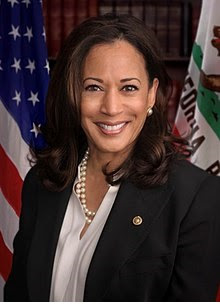
Kamala Harris Gave a Simple Message about Keeping Children Safe from Guns. Is It Enough?

Kamala Harris
Warning of the horrors of gun violence that America's children face daily, Vice President Kamala Harris said, “let’s understand how many people in our country, including the children, are experiencing profound trauma.”

A simple message bears repeating. Needs repeating. 

Harris visited Eastway Middle School in Charlotte, North Carolina on January 11th, 2024, to host a Roundtable Discussion on Gun Violence Prevention in Charlotte, North Carolina.

After meeting privately with a group of students, Harris delivered a brief, thoughtful speech in which she thanked community leaders for trying to protect our children from being shot. She gave the kind of straightforward message that jaded audiences tend to ignore. Can Harris give her simple message more force?  Yes, of course she can, but there is a “but.” The “but” is that they need to repeat their messages, over and over, because, as the saying goes, quantity has a quality all its own. Harris’ speech, by itself, gained little attention, but a speaking tour might. So, after discussing Harris’ comments, I’ll go back in history to show how a politician can gain attention by calmly repeating a message.


A Simple, Profound Message

Now, during her brief speech, Harris gave her key point in one simple, stark, quotable statement:
“…in the United States of America today the number one killer of our children in America is gun violence — not car accidents, not some form of cancer. Gun violence is the number one killer of the children of America.”
That simple fact should, in principle, fill parents with fear. Yes, parents might worry instead about what books their children read, what clothes they wear in school, and who they make friends with. Some parents are terrified that children might see a drag show or learn about Jim Crow laws. We have become so numb to school shootings and random drive-bys that we easily forget that the main danger that children face in the United States is that someone will shoot them. Harris focused squarely on that simple fact.

Harris used the power of her office to remind all of us of one basic, fundamental danger. She calmly made a positive point about community involvement and children’s safety. She stated the simple fact that gun violence is the greatest threat to children. Will that be enough?

Harris’ speech received some attention in the press, although not as much as the issue deserves. While the nation grows breathless over migrant crossings at Eagle Pass, drag shows, or Donald Trump’s latest rant, why do we pay so little attention to the gun violence that poses, by far, the greatest threat to our nation’s youth? “Ho, hum,” Americans say, “a dozen children were shot dead yesterday. Ho, hum.” For, although the issue remains important, Harris does not try to draw all of the air out of the room by spreading hysterical conspiracy theories. Will her message have a long-term effect? If she and other advocates pound away on this issue often enough, will the public begin to take it more seriously? 


How McKinley Did It


Yet, simple messages can succeed if the speaker is persistent. History teaches this lesson. In 1899, with the Spanish-American War safely in the history books, President William McKinley faced the daunting task of convincing the United States to become a world imperial power by annexing the Philippine islands. Many Americans, especially in the conservative South favored letting the Filipinos have their own government. McKinley went on a series of speaking tours through the nation, particularly in the hostile South (McKinley was a Union Civil War hero!), to sell his ideas. He avoided startling language. His policy discussions were vague and safe. His speeches were calm and dignified. He gave his respects to dead Confederate soldiers. He often traveled with General Joseph Wheeler, a southerner who was a hero of both the Civil War and the Spanish American War. Even Southerners who didn't like McKinley cheered for Wheeler. McKinley's tours gained public support and the Senate ratified the treaty.

I'll write some more about McKinley in the future. In the meantime, here are the lessons:

1. A speaker can gain attention without screaming like a lunatic.

2. A speaker who wants to sell a contentious idea can't just talk to supporters. A speaker also needs to reach out to unfriendly audiences. That takes determination.

3. Traveling not only gives the speaker new audiences, but also access to the local press. More local papers (today, more local TV coverage)—more attention!

4. It is rare for one speech, no matter how good, to do the job. Persistence means success.


Back to Harris

So, it is fine for Harris to give calm, safe, speeches. Democrats don’t need to act like Republicans. Harris just needs to give more calm, reasoned speeches, and to give them in more places to more audiences. Sadly, few Americans even know that she went there. However, people would eventually notice if she toured many middle schools to talk about gun violence.

Overall, Joe Biden and Kamala Harris are giving good speeches to good audiences, and they are making good points. They just aren't doing it enough. Speakers do not need to draw all the oxygen out of the room. They don't need to scream conspiracy theories. They just need to make sense, over, and over, and over again. As much as anything, speakers need to be persistent. 

After all, when Harris said that, “the number one killer of our children in America is gun violence,” that powerful statement should terrify any parent. But to say it only once, or only a few times? Never enough. Why isn’t she giving three or four speeches a week about gun violence, across the country, including at least some speeches at events and schools in the gun culture regions? A speaker needs to be heard.
______________


Earlier Post: Kamala Harris' Speech at West Point: Tradition and Innovation

Earlier Post: Kamala Harris' College Speech: Voting is the Way
______________


Conclusion

Still, Harris focused—and focused precisely—on the danger that firearms pose to children. That represents a step toward raising public interest in the threat. Will the nation listen? Or not?

By William D. Harpine

______________

Research note: I discussed McKinley’s speaking tours in a chapter of Before the Rhetorical Presidency, edited by the late Martin J. Medhurst. Available new or used from Amazon, and can be read in large research libraries. (Disclosure: I do not get royalties from this one, but I was proud to write the chapter.) 

Also, here is a full text of a convention paper that I presented about McKinley’s speaking tours. 

Click “William D. Harpine’s Publications” at the link above for more of my writing about McKinley. 


Copyright © 2024, William D. Harpine
Image: Official White House photo

Monday, October 11, 2021

The Build Back Better Agenda: Will Democrats Use the Bully Pulpit? Or Not? William McKinley Shows the Way

Joe Biden
Joe Biden
A CBS/YouGov opinion poll released yesterday (October 10, 2021) revealed that the majority of Americans have no idea, or only a vague idea, of what the Democratic Party’s Build Back Better legislative bill even contains. At this point, the bill’s passage is in doubt. If it does pass, it will probably be much-reduced.

No surprise there! Why should the public know anything about the bill? Who is telling them? Pretty much no one. If the Democrats want this legislation to pass, they need to sell it.

We’re hearing all kinds of stuff in the press, and from Democratic speakers, arguing about how big the bill should be. Should it be $3.5 trillion? Or some smaller amount? Should it be paid for by taxing the rich?

Get a clue! Voters care about none of that. They want to know what the bill is doing. They want to know what it might do for them. And, in fact, all of the bill’s provisions – and I mean all of them – are polling very well. The public likes the idea of shoring up Medicare, expanding broadband access in rural areas, improving dental and vision care, and upgrading the nation’s rotting, crumbling roads and highways. Polls show that voters even support the climate provisions. Who would have guessed?

But there is a big disconnect. The public isn’t going to support the legislation unless they realize that it contains bunches of things that they like.

Much is made of the reluctance of senators Kyrsten Sinema and Joe Manchin. They both come from relatively conservative states. The fact remains that their states would benefit tremendously from this legislation. So why are they stalling? Have they been bribed by big business? Are they playing both sides? Who knows? Who cares? Forget about all of that. Members of Congress are simple, uncomplicated creatures who do whatever it takes to get reelected. Convince the voters of Arizona and West Virginia that they want the Build Back Better agenda, and Sinema and Manchin will magically agree and vote accordingly. Bingo.

There is precedent for this. We know how presidents can sell an unpopular agenda. More than a century ago, when President William McKinley wanted an uncooperative Senate to ratify the Treaty of Paris, which ended the Spanish-American War and annexed the Philippine Islands, he did what any smart modern president would do. He went on speaking tours.
William McKinley
William McKinley

These were not just any speaking tours. Among other parts of the country, McKinley traveled by train to the South, where opposition to his policies was strongest, where he gave speech after speech. He traveled in the company of the ever-popular Confederate General Joseph Wheeler, who had rejoined the United States Army and was the hero of the Spanish-American War. Wheeler was a Democrat, while McKinley was a Republican, and they had fought on opposite sides of the Civil War. McKinley’s speeches were vague, carefully constructed to offend as few people as possible. He praised the South. He promised to care for the graves of Confederate soldiers. He talked about trade and prosperity. He exalted the “protecting folds” of the American flag, which would spread out to give prosperity and justice to the Filipino people. He praised soldiers and sailors of the South and North alike for the quick, popular victory over Spain. In other words, he went directly to his opponents’ territory and reached out concerning issues they cared about.

And, guess what? It worked. The Senate ratified the treaty by the required two-thirds vote. The United States quickly annexed the Philippine Islands. Now, unfortunately, the annexation didn’t go quite as well as McKinley had expected. Filipinos immediately launched a bitter war of independence in an effort to drive the Americans out of their country. The fact remains that McKinley had a policy, the policy was not attractive, and yet he convinced the public to support it. Once the public was on his side, the senators meekly dropped into place.
Joe Biden speaking about Build Back Better
Biden Speaking about Build Back Better

Let us come back to 2021. If Democrats want to sell their agenda, they need to reach out. They need to reach out much more aggressively than they have so far. President Joe Biden has given some speeches about the proposal. Those speeches were fine. He has not, however, given enough speeches. He needs to tell people about his agenda every day. He needs to reach out to different audiences – every day. Leading Democrats need to do more than to offer a few mumbled comments on the Sunday morning TV shows. They need to hold town halls, one after the other, and explain the benefits that their agenda will bring to people. Instead of sniping at one another on Twitter, they need to use their social media to tell people what the bill contains and how it will help them.
________________

More Information: Biden and the Bully Pulpit: Biden’s Infrastructure Speech
________________

And that is not enough. The Democrats need to go on Fox News. Democrats today act as if Fox News is poison. Why? The Fox News audience is exactly the people they need to reach. They need to get on talk radio. If they want to talk about the United States as one unified country, they need to reach out to people who disagree with them. Remember, McKinley was a decorated combat veteran of the Civil War. (Or, as Southerners of the time sometimes said, the War of Northern Aggression.) He didn’t expect to get a lot of support from the South. He did not even expect them to like him. He did know, however, that he needed to reach out to the South to moderate their opposition to his proposals, to show that he cared about them, and to solicit unity. He spoke to a friendly audience at a southern African-American University. He spoke to the Georgia legislature. Making a appearance on Fox News can’t be as hard as what McKinley did.

Theodore Roosevelt called the presidency the “bully pulpit.” And he was right. Political scientist Jeffrey Tulis said that modern presidents routinely bypass Congress to sell their ideas directly to the public. That is what the Democrats need to do.

People often talk about how former President Donald Trump is always in the news. Pundits say that he sucks the oxygen right out of the room. They are right. Trump controls the agenda. He controls the agenda by holding rallies, making media appearances, and generally making a nuisance of himself. You might not like him, but you can’t ignore him. President Biden is getting too easy to ignore. The Democrats are too easy to ignore. They need to climb on the bully pulpit and commandeer their share of the media’s oxygen. That does not mean that they need to say stupid things like what Trump says. It means that they need to tell people about their agenda – over, over, and over. They need to tell people why the agenda is needed and how it will work. That is why we have the bully pulpit. As I have said many times, the side that sets the agenda will win the debate.

Throughout his career, McKinley emphasized unity in the face of disorder and compassion in the face of strife. I don’t see any reason that it wouldn’t work today. The way to overcome polarization is with unity.

So, are the Democrats giving good speeches? Or bad speeches? That’s not the point. The point is that they are not giving enough speeches. They need to inform the public. They need to set the agenda.

---
________________

________________

Research Note: I wrote about McKinley’s speaking tours in a chapter that I wrote for Before the Rhetorical Presidency. Copies are available in most large libraries, and, of course, it is available for sale in major bookstores. I also wrote an unpublished paper about McKinley’s speaking techniques during his tour to sell the treaty; link above. Click on William D. Harpine’s Publications above to see more of my writing about McKinley’s speeches.

From the Front Porch to the Front Page
Interested readers might want to look at my book, From the Front Porch to the Front Page, about public speaking in the 1896 presidential campaign between McKinley and William Jennings Bryan. There are chapters about McKinley’s use of such themes as identification and unity. The book is now available in paperback, and, of course, many university libraries have it on their shelves. 

Mel Laracey’s excellent book, Presidents and the People: The Partisan Story of Going Public, includes an insightful discussion of McKinley and the rhetorical presidency.

P.S. If you want to bypass the politicians and read a summary of Build Back Better, here is a simple explanation. 


Image of Biden: White House photo. Image of McKinley: Library of Congress. Image of Biden's speech: White House YouTube channel.